
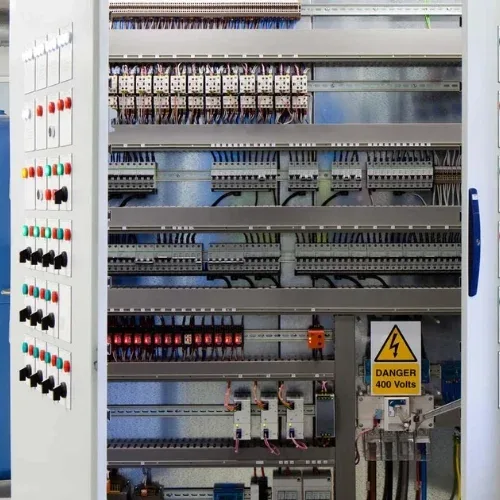
Reliable electrical power distribution is essential for industrial plants, commercial facilities and infrastructure projects. Different machines, production systems and electrical loads require power to be distributed safely and in an organized manner.
A Power Panel provides a centralized arrangement for receiving, controlling, protecting and distributing electrical power to different circuits and connected equipment. A properly designed Power Distribution Panel can help organize incoming power and distribute it through multiple outgoing feeders according to the requirements of the electrical system.
This guide explains the purpose, components, applications, protection features and important selection factors of industrial power panels.
What Is a Power Panel?
A Power Panel is an electrical panel used to receive and distribute electrical power to multiple circuits, machines, equipment or operating areas.
The panel can include suitable switching, protection, distribution, control and monitoring components depending on the electrical system.
Its configuration can vary according to:
- Incoming power supply
- Operating voltage
- Connected load
- Number of outgoing feeders
- Protection requirements
- Enclosure requirements
- Installation environment
- Project specifications
A suitable configuration helps create an organized electrical distribution arrangement for the facility.
What Is a Power Distribution Panel Used For?
A Power Distribution Panel provides a structured point for distributing incoming electrical power to multiple outgoing circuits.
Instead of managing different electrical feeders through disconnected arrangements, a centralized distribution panel can organize them within one electrical system.
Depending on the project, it can support:
- Electrical power distribution
- Feeder management
- Circuit protection
- Switching
- Load management
- Electrical monitoring
- Equipment protection
For facilities where motor-driven equipment is a major part of the electrical system, a MCC Panel can work alongside the power distribution arrangement for centralized motor control.
Main Components of an Electrical Power Panel
The exact components of an Electrical Power Panel depend on the electrical design and connected loads.
Distribution Arrangement
The distribution arrangement is designed according to the incoming supply and the number and type of outgoing electrical circuits.
Protection Devices
Suitable protection arrangements can be selected according to the connected load and electrical system requirements.
Busbar System
The busbar system provides the required electrical distribution path inside the panel. Its material and capacity depend on the panel design and electrical load.
Switching Equipment
Switching components can be incorporated for controlling and isolating electrical circuits according to the project requirements.
Control and Monitoring
Where required, control and monitoring components can be integrated to provide better visibility of electrical operating conditions.
Key Features of a Power Panel
A properly engineered Power Panel can provide several useful features for industrial and commercial electrical systems.
Centralized Power Distribution
Multiple electrical circuits and connected equipment can receive power through an organized distribution arrangement.
Electrical Protection
Suitable protection equipment can help protect circuits and connected equipment according to the system design.
Customized Configuration
Panel configuration can be developed according to voltage, load capacity, feeder requirements, enclosure and installation conditions.
Organized Construction
Proper component arrangement and internal construction can support inspection, troubleshooting and maintenance.
Reliable Operation
A suitable panel design can support stable and dependable electrical power distribution for the intended application.
Power Panel Technical Considerations
Before designing a Power Distribution Panel, several electrical parameters should be considered.
Voltage and Supply
The incoming electrical supply and operating voltage should be identified before finalizing the panel configuration.
Load Capacity
Connected loads should be evaluated to determine the required electrical capacity.
Number of Feeders
The number of outgoing circuits and their individual requirements should be considered.
Protection Level
Protection requirements should be selected according to the electrical system and connected equipment.
Enclosure
The enclosure material and protection degree should be suitable for the installation environment.
Future Expansion
Where future electrical loads may increase, the distribution arrangement can be planned with suitable expansion considerations.
Applications of Power Panels
Power Panels can be used across a wide range of industrial, commercial and infrastructure applications.
Common applications include:
- Manufacturing industries
- Pharmaceutical plants
- Chemical industries
- Food processing units
- Textile industries
- Water treatment plants
- Commercial buildings
- Engineering industries
- Cement plants
- Power generation facilities
- Infrastructure projects
- Automobile industries
In automation-focused facilities, a PLC SCADA Panel can complement the electrical infrastructure by supporting process control, monitoring and automation.
Power Panel vs Motor Control Panel
A Power Panel primarily focuses on electrical power distribution, feeder management and protection.
A motor-control arrangement, on the other hand, is designed specifically around controlling and protecting motor-driven equipment.
The two systems can work together within a larger industrial electrical infrastructure. For applications requiring variable motor speed and controlled motor operation, a VFD Panel can also be integrated according to the system requirements.
Benefits of an Electrical Power Panel
A properly configured Electrical Power Panel can provide several operational benefits.
Centralized Distribution
Electrical power can be distributed to multiple circuits from a structured centralized arrangement.
Better Electrical Management
Organized feeder and protection arrangements can make electrical distribution easier to manage.
Equipment Protection
Suitable protection devices can help protect electrical circuits and connected equipment according to the system design.
Easier Maintenance
Organized construction can support inspection, troubleshooting and servicing of electrical components.
Customized Design
The panel can be developed according to the project’s voltage, load, feeder, enclosure and protection requirements.
How to Select a Power Panel Manufacturer?
Selecting a suitable Power Panel Manufacturer involves more than comparing the physical size or appearance of different panels.
Important factors include:
- Understanding of electrical distribution requirements
- Suitable component selection
- Load and feeder planning
- Protection arrangement
- Enclosure selection
- Busbar configuration
- Quality of construction
- Project-specific customization
- Testing and quality checks
Bull Industries develops customized Power Panels according to electrical load, voltage requirements, enclosure configuration, protection requirements and installation conditions.
For applications requiring centralized power control and distribution, a PCC Panel can also be considered as part of the overall electrical system.
Frequently Asked Questions
What is a Power Panel?
What is a Power Distribution Panel?
What is an Electrical Power Panel?
Can a Power Panel be customized?
Where are Power Panels used?
What should be considered when selecting a Power Panel?
Conclusion
A Power Panel is an important part of an industrial electrical distribution system. It provides a centralized arrangement for receiving, controlling, protecting and distributing electrical power to multiple circuits and connected equipment.
A properly designed Power Distribution Panel can improve organization, protection and management of electrical distribution while allowing the configuration to be customized according to project requirements.
Choosing an experienced Power Panel Manufacturer can help ensure that the panel configuration, protection, distribution arrangement and components are aligned with the actual electrical requirements of the application.