
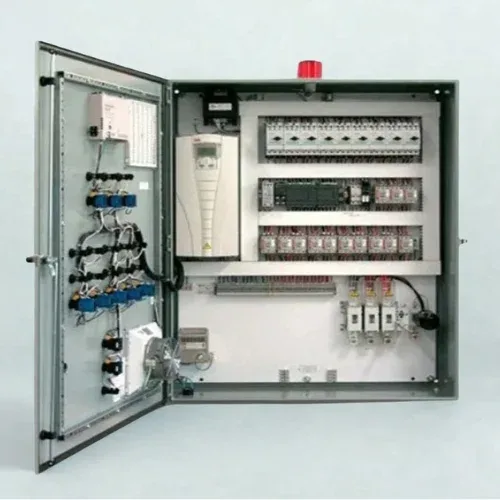
Industrial facilities require organized electrical power distribution to supply machines, production systems and other connected equipment. As the number of electrical loads increases, centralized distribution and protection become important for efficient plant operation.
A PCC Panel provides a centralized arrangement for receiving electrical power and distributing it to multiple outgoing feeders. A Power Control Center Panel can incorporate circuit breakers, busbars, metering devices, protection equipment and control components according to the project’s electrical requirements.
This guide explains the purpose, components, applications, benefits and important selection factors of PCC systems.
What Is a PCC Panel?
A PCC Panel, or Power Control Center Panel, is an electrical distribution panel used to receive, control, protect and distribute electrical power to different feeders and equipment.
The panel can be designed according to:
- Incoming power supply
- Voltage requirements
- Current capacity
- Connected load
- Number of outgoing feeders
- Breaker selection
- Protection requirements
- Installation environment
This allows the distribution arrangement to be customized according to the electrical architecture of the facility.
What Is a Power Control Center Panel Used For?
A Power Control Center Panel is mainly used for centralized electrical power distribution and feeder management.
Incoming power is received through the main electrical supply and distributed through outgoing feeders to different machines, equipment and electrical systems.
A typical arrangement can provide:
- Centralized power distribution
- Feeder management
- Circuit protection
- Switching
- Electrical metering
- Equipment monitoring
- Controlled access to electrical components
For motor-driven equipment, a MCC Panel can work alongside the PCC system to provide centralized motor control and protection.
Main Components of a PCC Electrical Panel
The exact configuration of a PCC Electrical Panel depends on the connected load and project requirements. Common components can include:
Incoming Breaker
The incoming breaker can be configured as an MCCB or ACB according to the electrical system and required current capacity.
Outgoing Breakers
Outgoing MCCBs and other circuit breakers can be selected according to the connected loads and feeder requirements.
Busbar System
Copper or aluminium busbars provide the electrical distribution path within the panel. Their capacity depends on the system load and design.
Metering and Protection
Metering devices, CTs and suitable protection equipment can be incorporated for electrical measurement and system protection.
Control Components
Indicating lamps, terminal blocks, control wiring and other control components can be included according to the panel configuration.
Earthing Arrangement
Suitable earthing arrangements can be incorporated as part of the electrical safety design.
Key Features of a PCC Panel
A properly designed PCC Panel can provide several important features for industrial electrical systems.
Centralized Power Distribution
Multiple outgoing feeders can receive power from a centralized electrical distribution arrangement.
Electrical Protection
Suitable circuit breakers and protection systems can help protect connected circuits against electrical faults.
Customized Configuration
The panel can be developed according to incoming supply, load, breaker selection, feeder quantity and project specifications.
Easy Maintenance
Organized component placement and accessibility can support inspection, servicing and maintenance.
Reliable Operation
A properly configured Power Control Panel can support dependable electrical distribution for industrial and commercial installations.
PCC Panel Technical Specifications
| Parameter | Specification |
|---|---|
| Panel Type | Power Control Center Panel |
| Voltage Rating | As per Requirement |
| Frequency | 50/60 Hz |
| Phase | Three Phase |
| Enclosure Material | CRCA / MS / SS |
| Protection Degree | IP42 / IP54 / IP65 |
| Mounting Type | Floor Mounted |
| Busbar Material | Copper / Aluminium |
| Incoming Breaker | MCCB / ACB |
| Standards | IS / IEC Compliant |
| Customization | Available |
Applications of PCC Panels
PCC Panels are used in different industrial and commercial environments where centralized power distribution is required.
Common applications include:
- Manufacturing industries
- Pharmaceutical plants
- Chemical industries
- Food processing units
- Textile industries
- Cement plants
- Water treatment plants
- Power generation facilities
- Commercial buildings
- Infrastructure projects
- Engineering industries
- Automobile manufacturing
For automation-focused facilities, a PLC SCADA Panel can complement the electrical distribution system with process monitoring and control.
PCC Panel vs MCC Panel
A PCC Panel and an MCC Panel have different primary functions.
A PCC system is mainly designed for electrical power distribution, feeder management, switching and protection.
An MCC system is primarily designed for motor control and motor protection.
In a larger industrial electrical system, both can work together. The PCC can distribute electrical power while the MCC manages connected motor-driven equipment.
Benefits of a PCC Electrical Panel
A properly configured PCC Electrical Panel can provide:
- Centralized electrical power distribution
- Organized incoming and outgoing feeder management
- Electrical protection
- Convenient metering and monitoring
- Flexible configuration
- Easier inspection and maintenance
- Customized design according to project requirements
For facilities with broader electrical distribution requirements, a Power Panel can also form part of the overall electrical infrastructure.
How to Select a PCC Panel Manufacturer?
Choosing a suitable PCC Panel Manufacturer requires understanding the actual electrical requirements of the project.
Important considerations include:
Load Requirements
The total connected load and individual feeder requirements should be evaluated.
Breaker Selection
Incoming and outgoing breakers should be selected according to the electrical load and protection requirements.
Busbar Capacity
Busbar material and capacity should be suitable for the required electrical distribution.
Protection Requirements
Overload, short-circuit, earth-fault and other required protection features should be considered.
Enclosure and Segregation
The enclosure and internal arrangement should suit the installation environment and project requirements.
Future Expansion
Where additional feeders may be required in the future, suitable expansion considerations can be included in the design.
Why Choose a Customized PCC Panel Manufacturer?
Industrial electrical systems differ in terms of voltage, load, number of feeders, protection requirements and installation conditions.
A customized PCC Panel Manufacturer can develop the panel according to the project’s specific electrical requirements, including breaker configuration, busbar arrangement, metering, enclosure and internal layout.
Bull Industries manufactures customized PCC Panels designed for electrical power distribution, protection, monitoring and industrial applications.
For applications requiring variable motor-speed control, a VFD Panel can also be integrated into the wider industrial electrical system.
Frequently Asked Questions
What is a PCC Panel?
What is a Power Control Center Panel?
What is a PCC Electrical Panel?
What is the difference between PCC Panel and MCC Panel?
Can a PCC Panel be customized?
Where are PCC Panels used?
Conclusion
A PCC Panel provides a centralized solution for industrial electrical power distribution, feeder management, protection and monitoring. A properly designed Power Control Center Panel can organize incoming and outgoing electrical circuits while allowing the configuration to be adapted to the project’s requirements.
From incoming ACB or MCCB and busbars to outgoing breakers, metering and protection equipment, each component should be selected according to the actual electrical system.
Working with an experienced PCC Panel Manufacturer can help ensure that the panel’s distribution, protection and configuration are properly matched to the application.