
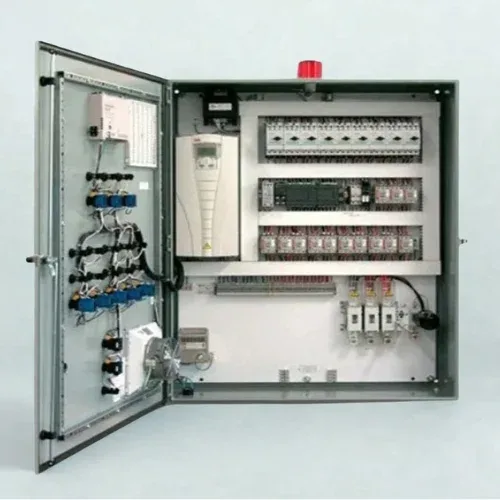
Industrial facilities often depend on multiple diesel generator sets when reliable electrical power is required. When more than one generator operates within the same electrical system, proper coordination and synchronization become important for stable power management.
A Synchronizing Panel is designed to coordinate generator sets and manage their connection to a common electrical system. A DG Synchronization Panel can monitor important electrical parameters and control synchronization according to the requirements of the installation.
This guide explains how synchronizing panels work, their main components, applications, benefits and important factors to consider when selecting a suitable system.
What Is a Synchronizing Panel?
A Synchronizing Panel is an electrical control panel used to synchronize two or more generator sets, or generators with another power source, before connecting them to a common busbar.
The synchronization process generally considers parameters such as:
- Voltage
- Frequency
- Phase sequence
- Phase angle
- Generator status
- Load conditions
Once the required synchronization conditions are achieved, the system can allow the appropriate generator breaker to close according to the configured control logic.
How Does a DG Synchronization Panel Work?
A DG Synchronization Panel continuously monitors the electrical conditions of connected generator sets and the common busbar.
A simplified sequence is:
DG Sets → Parameter Monitoring → Synchronization Controller → Breaker Control → Common Busbar
The synchronization controller compares the required electrical parameters and controls the generator breakers according to the programmed operating sequence.
This arrangement can help coordinate multiple DG sets and support controlled power distribution.
For plants where motor loads also require centralized control, a MCC Panel can work alongside the generator synchronization system.
Main Components of a Synchronization Control Panel
The exact configuration depends on the number of generators and project requirements.
Synchronization Controller
The synchronization controller manages the synchronization process according to configured electrical parameters and control logic.
Protection Relays
Suitable protection relays can be incorporated to monitor electrical conditions and protect the generator and connected system.
Circuit Breakers
Generator breakers provide controlled connection and isolation of individual DG sets from the common busbar.
Metering Devices
Voltage, current, frequency, power and other electrical parameters can be monitored through suitable metering arrangements.
PLC and HMI
A PLC and HMI can be incorporated where advanced control, visualization and operator monitoring are required.
Key Functions of a Synchronizing Panel
A properly configured DG Synchronizing Panel can support several important functions.
Automatic Synchronization
Multiple generators can be synchronized according to the configured control sequence.
Load Sharing
The system can coordinate connected generators to support controlled load distribution.
Generator Monitoring
Important electrical and operating parameters can be monitored during generator operation.
Manual Operation
Depending on the configuration, manual synchronization and control functions can also be provided.
Power Management
The system can help coordinate available generator capacity according to the requirements of the electrical installation.
Benefits of DG Synchronization Panels
A properly designed Synchronizing Panel can provide useful advantages for facilities operating multiple generators.
Coordinated Generator Operation
Multiple DG sets can operate as part of a coordinated electrical system.
Load Management
Generator operation can be managed according to electrical load requirements.
Flexible Power Availability
Multiple generators can provide greater flexibility in managing available generating capacity.
Centralized Monitoring
Generator status and electrical parameters can be monitored from a centralized panel.
Automated Operation
Automatic synchronization sequences can reduce the need for continuous manual synchronization.
Applications of Synchronizing Panels
DG Synchronization Panels can be used in facilities where multiple generators or power sources need coordinated operation.
Common applications include:
- Manufacturing plants
- Pharmaceutical industries
- Chemical industries
- Hospitals
- Commercial facilities
- Data-related facilities
- Infrastructure projects
- Process industries
- Large industrial plants
- Power backup systems
For facilities requiring centralized process monitoring, a PLC SCADA Panel can complement the synchronization system.
Synchronizing Panel vs Conventional DG Control Panel
A conventional DG control arrangement may focus primarily on the operation and protection of an individual generator.
A synchronization system is designed for coordinated operation of multiple generators or power sources.
A Synchronization Control Panel can therefore include additional functions such as:
- Synchronization
- Load sharing
- Busbar monitoring
- Generator coordination
- Breaker control
- Power management
- Centralized monitoring
The actual functionality depends on the generator configuration and project requirements.
How to Select a Synchronizing Panel?
Before selecting a Synchronizing Panel Manufacturer, the complete generator and electrical system should be evaluated.
Number of DG Sets
Determine how many generators need to operate together.
Generator Capacity
The rating and operating characteristics of each DG set should be considered.
Synchronization Requirements
Identify whether automatic, manual or both synchronization methods are required.
Load Sharing
Determine the required load-sharing arrangement between generators.
Protection
Suitable electrical protection should be selected according to the generator and system requirements.
Monitoring
Define the electrical parameters and generator information that operators need to monitor.
Future Expansion
If additional generators may be added later, the system can be planned with suitable expansion capability.
Why Choose a Customized Synchronizing Panel Manufacturer?
Every generator installation has different capacities, operating sequences, protection requirements and power-management needs.
An experienced Synchronizing Panel Manufacturer can configure the system according to:
- Number of DG sets
- Generator capacity
- Synchronization requirements
- Load-sharing requirements
- Breaker configuration
- Protection requirements
- Monitoring requirements
- PLC/HMI requirements
- Project-specific operating conditions
Bull Industries provides customized industrial electrical panel solutions designed around application-specific requirements.
For electrical power distribution connected with the generator system, a PCC Panel can also form part of the overall electrical infrastructure.
Frequently Asked Questions
What is a Synchronizing Panel?
What is a DG Synchronization Panel?
What is a DG Synchronizing Panel used for?
Can synchronization be automatic?
Can multiple DG sets work together?
Can a Synchronizing Panel be customized?
Conclusion
A Synchronizing Panel provides a centralized solution for coordinating multiple DG sets and managing their operation within an electrical power system. A properly designed DG Synchronization Panel can support synchronization, load sharing, generator monitoring, breaker control and power management.
The final configuration should be selected according to generator capacity, number of DG sets, protection requirements, synchronization method and operating conditions.
Choosing a suitable Synchronizing Panel Manufacturer can help develop a system that matches the actual generator and electrical requirements of the facility.