
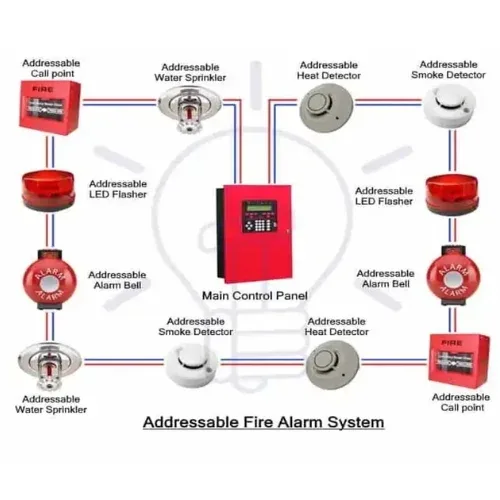
Fire detection and alarm systems play an important role in protecting industrial, commercial and institutional facilities. A centralized control system helps operators monitor connected detection devices and identify alarm or fault conditions.
A Fire Control Panel acts as the central control unit of a fire detection and alarm system. It receives signals from connected devices, processes alarm conditions, monitors system status and activates configured notification equipment when required.
A properly configured Fire Alarm Control Panel can support smoke detectors, heat detectors, manual call points, hooters, visual indicators and other compatible fire safety devices.
What Is a Fire Control Panel?
A Fire Control Panel is the central interface between fire detection devices and alarm notification equipment.
It continuously monitors connected zones or devices and processes signals received from equipment such as smoke detectors, heat detectors and manual call points.
When an alarm condition is detected, the system can activate audible and visual notification devices according to the configured system design. It can also indicate faults or abnormal conditions that require attention.
The final configuration depends on the number of detection zones, building layout, device type, communication requirements and project specifications.
What Is a Fire Alarm Control Panel?
A Fire Alarm Control Panel receives information from connected fire detection devices and manages the alarm system from a centralized location.
Its functions can include:
- Monitoring detection zones
- Processing alarm signals
- Monitoring system status
- Providing alarm indication
- Providing fault indication
- Activating notification devices
- Supporting conventional or addressable configurations
For larger facilities requiring centralized industrial automation and monitoring, a PLC SCADA Panel can form part of the wider control infrastructure.
Main Components of a Fire Alarm Panel
The exact configuration depends on the fire safety system design. A Fire Alarm Panel can include several detection, monitoring and notification components.
Smoke Detectors
Smoke detectors can provide signals to the control panel when smoke-related conditions are detected.
Heat Detectors
Heat detectors can be used in areas where temperature-based fire detection is required.
Manual Call Points
Manual call points allow occupants or authorized personnel to manually initiate a fire alarm.
Hooters and Sounders
Audible notification devices can alert people when an alarm condition is activated.
Visual Indicators
Visual alarm indicators can provide visible notification where required.
Display and Indication
LED or LCD displays can provide information about system status, alarms and faults.
Battery Backup
Battery backup and power supply arrangements can be incorporated according to the system configuration.
How Does a Fire Control System Panel Work?
A Fire Control System Panel receives signals from connected detection devices and continuously monitors the configured zones or devices.
A simplified process can be understood as:
Detection Device → Fire Control Panel → Alarm Processing → Audible/Visual Notification
For example, when a connected detector identifies a defined fire-related condition, the signal is transmitted to the control panel. The panel processes the signal and activates the configured alarm outputs according to the system design.
The panel can also indicate faults or abnormal system conditions requiring attention.
Key Features of a Fire Control Panel
A properly configured Fire Control Panel can provide several important functions.
Early Fire Detection
The panel receives signals from connected detection devices to support early identification of fire-related conditions.
Continuous System Monitoring
Connected zones, devices, alarms and system status can be monitored continuously according to the configured system.
Alarm Management
Alarm signals can be processed and connected audible or visual notification devices can be activated.
Customized Configuration
Detection zones, device configuration, enclosure and communication options can be customized according to project requirements.
Fault Indication
The system can indicate defined faults or abnormal conditions requiring attention.
Conventional or Addressable Systems
The panel can be configured for conventional or addressable fire detection systems according to the project design.
Conventional vs Addressable Fire Alarm Systems
Fire alarm systems can be configured using conventional or addressable architectures.
A conventional system generally monitors devices through defined zones, while an addressable system can identify individual devices through their configured addresses.
The appropriate configuration depends on factors such as:
- Building size
- Number of detection zones
- Device quantity
- System architecture
- Communication requirements
- Project specifications
The final selection should be based on the requirements of the specific fire safety installation.
Applications of Fire Control Panels
Fire Control Panels are used across a wide range of facilities where centralized fire detection and alarm monitoring are required.
Common applications include:
- Manufacturing industries
- Pharmaceutical plants
- Chemical industries
- Hospitals
- Hotels
- Warehouses
- Commercial buildings
- Educational institutions
- Data centers
- Shopping malls
- Office buildings
- Industrial processing plants
For facilities with large electrical distribution requirements, a PCC Panel can form part of the wider industrial electrical infrastructure.
Benefits of a Fire Alarm Control Panel
A properly configured Fire Alarm Control Panel can provide:
Centralized Fire Detection Monitoring
Connected detection devices and zones can be monitored from a centralized control point.
Early Alarm Notification
Alarm signals can activate configured audible and visual notification equipment.
Continuous System Status
Operators can monitor system status and defined fault conditions.
Customized Detection Zones
Detection zones can be configured according to the building layout and system design.
Audible and Visual Alarm Outputs
The system can support both audible and visual alarm notification according to the project requirements.
For other industrial electrical control requirements, a MCC Panel can provide centralized motor control and electrical protection.
How to Select a Fire Control Panel Manufacturer?
Before selecting a Fire Control Panel Manufacturer, the complete fire detection and alarm system requirements should be evaluated.
Building or Facility Size
The size and layout of the facility influence the required detection zones and device configuration.
Number of Detection Zones
Determine how many zones or individual devices need to be monitored.
Device Type
Identify whether the system requires smoke detectors, heat detectors, manual call points and other compatible devices.
System Type
Determine whether a conventional or addressable configuration is suitable for the project.
Communication Requirements
Where required, communication interfaces can be included according to the system architecture.
Power Backup
Suitable power supply and battery backup should be considered for the fire alarm system configuration.
Why Choose a Customized Fire Control Panel Manufacturer?
Every facility has different building layouts, detection zones, device quantities and fire safety requirements.
A customized Fire Control Panel Manufacturer can configure the system according to:
- Project size
- Detection zones
- Device configuration
- System type
- Communication requirements
- Enclosure specifications
- Alarm outputs
- Power supply
- Battery backup
Bull Industries manufactures customized fire detection and alarm panels according to project size, detection zones, communication requirements, building configuration and application needs.
For industrial facilities where variable-speed motor operation is required, a VFD Panel can also be part of the wider electrical control infrastructure.
Frequently Asked Questions
What is a Fire Control Panel?
What is a Fire Alarm Control Panel?
What is a Fire Alarm Panel?
What is a Fire Control System Panel?
Can a Fire Control Panel be customized?
What devices can be connected to a Fire Control Panel?
Conclusion
A Fire Control Panel provides a centralized solution for monitoring fire detection devices, processing alarm conditions and managing notification equipment. A properly configured Fire Alarm Control Panel can support detection zones, alarm monitoring, fault indication and audible or visual notification.
The final system should be designed according to the facility size, detection zones, device configuration, communication requirements and selected conventional or addressable architecture.
Choosing an experienced Fire Control Panel Manufacturer can help develop a customized fire detection and alarm solution suited to the requirements of the facility.