
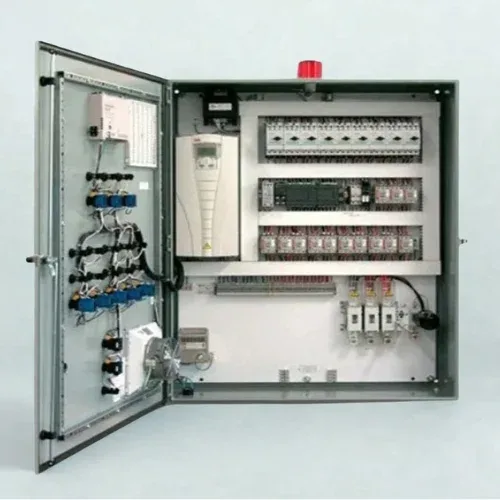
Modern industrial plants require accurate control, monitoring and automation of different machines and processes. As the number of equipment, sensors and operating parameters increases, manual monitoring can become difficult and time-consuming.
A PLC SCADA Panel combines programmable control with centralized monitoring to help manage industrial processes from an organized control system. A PLC Control Panel can execute programmed operations, while a SCADA system provides monitoring, visualization, alarms and process information.
This guide explains the role, components, applications, benefits and important considerations of PLC SCADA systems in industrial environments.
What Is a PLC SCADA Panel?
A PLC SCADA Panel is an industrial automation control arrangement that combines a Programmable Logic Controller with a SCADA-based monitoring system.
The PLC is responsible for executing programmed control logic and communicating with field devices. SCADA provides an interface through which operators can monitor process conditions, alarms, equipment status and other important information.
Depending on the application, the system can be configured for:
- Machine control
- Process automation
- Equipment monitoring
- Alarm management
- Data collection
- Operator interface
- Communication with field devices
The final configuration depends on the process and automation requirements.
How Does a PLC SCADA Panel Work?
A typical PLC and SCADA system works through communication between field devices, the PLC and the operator interface.
A simplified flow can be understood as:
Sensors & Field Devices → PLC → SCADA System → Operator Monitoring
Sensors and connected equipment provide process information to the PLC. The PLC processes the information according to programmed logic and can control connected equipment.
The SCADA interface can then display important process information to operators, allowing them to monitor equipment status and respond to alarms or changing operating conditions.
For applications where motor control is a major requirement, a VFD Panel can also be integrated with the automation system for variable-speed motor operation.
Main Components of a PLC SCADA Panel
The exact configuration depends on the automation project, but several components are commonly considered.
PLC
The PLC acts as the primary programmable controller and executes the required control logic.
HMI
An HMI can provide a graphical interface for operators to view equipment status, process information and control functions.
SCADA System
The SCADA system provides centralized monitoring, visualization, alarm management and process information.
Communication Components
Communication interfaces allow the PLC, HMI, SCADA and field devices to exchange information according to the selected communication architecture.
Power Supply and Protection
Suitable power supply and protection components can be included to support reliable operation of the control system.
Key Functions of a PLC Control Panel
A PLC Control Panel can perform different automation and control functions depending on the application.
Process Control
The PLC can execute programmed logic based on process inputs and operating conditions.
Equipment Monitoring
Connected equipment and field devices can provide operating information to the control system.
Alarm Management
The system can identify defined abnormal conditions and provide alarm information to operators.
Data Monitoring
Important process parameters can be monitored through the SCADA interface.
Automatic Operation
Machines and processes can be operated according to programmed sequences and control logic.
Benefits of a PLC Automation Panel
A properly designed PLC Automation Panel can provide several advantages for industrial operations.
Centralized Monitoring
Operators can monitor multiple process parameters and equipment conditions through a centralized interface.
Automated Control
Predefined control logic can reduce the need for continuous manual operation.
Better Process Visibility
SCADA visualization can make important operating information easier to understand.
Alarm Monitoring
Defined alarms can help operators identify process or equipment conditions that require attention.
Flexible Configuration
PLC-based systems can be configured according to different machine and process requirements.
Integration
PLC SCADA systems can communicate with different industrial devices and control equipment according to the selected architecture.
Industrial Applications of PLC SCADA Panels
PLC SCADA Panels are widely used in applications where automation, process monitoring and centralized control are required.
Common applications include:
- Manufacturing plants
- Pharmaceutical industries
- Chemical industries
- Water treatment plants
- Food processing
- Textile industries
- Power-related facilities
- Process industries
- Packaging systems
- Material handling
- Pumping systems
- Industrial machinery
For centralized electrical distribution, a Power Panel can form part of the wider industrial electrical infrastructure.
PLC SCADA Panel vs Conventional Control Panel
A conventional control panel may provide basic electrical control functions, while a PLC SCADA system can offer programmable logic, monitoring, visualization, communication and data-related capabilities.
A PLC SCADA system can be particularly useful when an industrial process requires:
- Multiple control sequences
- Centralized monitoring
- Real-time process information
- Alarm management
- Equipment communication
- Automated operation
The appropriate system depends on the complexity and requirements of the industrial application.
How to Select a PLC SCADA Panel?
Selecting a PLC SCADA Panel Manufacturer requires understanding the actual automation requirements of the project.
Process Requirements
Identify the machines, processes and operations that need to be controlled.
Number of Inputs and Outputs
The required digital and analog inputs and outputs should be determined before PLC selection.
Communication Requirements
Communication requirements between PLCs, HMIs, SCADA systems and field devices should be considered.
HMI Requirements
Determine what process information operators need to monitor and control.
SCADA Requirements
Identify the required screens, alarms, trends, monitoring points and data requirements.
Future Expansion
If additional machines or control points may be added later, the system can be planned with suitable expansion capability.
Why Choose a Customized PLC SCADA Panel Manufacturer?
Every industrial automation project has different process requirements, control logic, communication needs and equipment configurations.
A customized PLC SCADA Panel Manufacturer can develop the control system according to:
- Process requirements
- PLC selection
- I/O requirements
- HMI configuration
- SCADA requirements
- Communication architecture
- Panel configuration
- Control philosophy
- Project-specific automation requirements
Bull Industries provides customized industrial panel solutions designed around application-specific control and automation requirements.
For motor-driven applications requiring centralized motor control, an MCC Panel can work together with the PLC-based automation system.
Frequently Asked Questions
What is a PLC SCADA Panel?
What is a PLC Control Panel?
What is a SCADA Control Panel?
What is a PLC Automation Panel?
Where are PLC SCADA Panels used?
Can a PLC SCADA Panel be customized?
Conclusion
A PLC SCADA Panel provides a centralized approach to industrial automation, process control and monitoring. By combining programmable control with SCADA visualization, industries can monitor equipment, manage processes, handle alarms and automate defined operations through a structured control system.
The right PLC SCADA Panel Manufacturer should configure the system according to the actual process, I/O requirements, communication architecture, HMI requirements and future expansion needs.
When properly designed, PLC SCADA automation can become an important part of a modern industrial electrical and control infrastructure.